How it works
How the EPC finder works
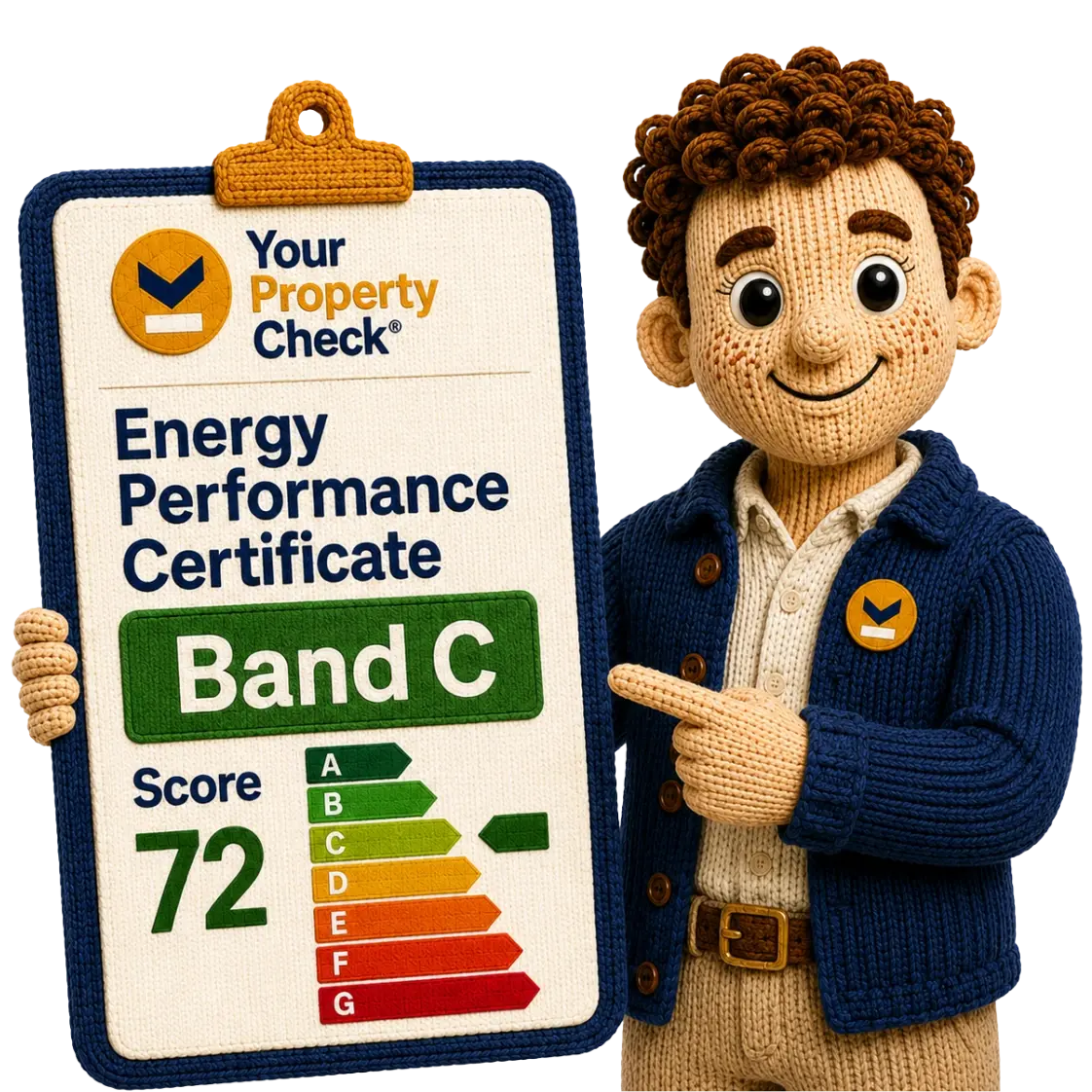
Type a UK postcode and we query the official GOV.UK Energy Performance of Buildings register live — no cached copies, no scraped data. Every certificate lodged at that postcode comes back with its current band A–G, the address, the local authority and the registration date, and each one links straight to the full certificate on GOV.UK: the numeric score, the potential rating and the assessor’s recommended improvements.
Because certificates last ten years, a postcode often shows several per address — read the most recent one, and treat an old certificate as a prompt to ask whether anything (boiler, insulation, windows) has changed since it was issued.
Why the EPC matters when buying
The band is a running-cost signal first: the gap between a D and an F home can be well over a thousand pounds a year in energy. It also matters for landlords — minimum-standard rules apply to lettings — and increasingly for lenders, some of whom price “green” mortgage products by band. The recommendations list on the full certificate is effectively a costed improvement plan for the property.
An EPC is one panel of the picture. See it alongside sold prices, crime, flood and planning for any property in its OfferCheck, or check the letting angle first: can I rent out a property with a low EPC?
Questions
EPCs — the honest version
- Where does the EPC data come from?
- Live from the official GOV.UK Energy Performance of Buildings register — the same national register assessors lodge certificates into. We show each certificate’s band, address and registration date, with a link to the full certificate on GOV.UK.
- Does every property have an EPC?
- No. An EPC is required when a property is built, sold or let, and lasts ten years — so a home that hasn’t changed hands or been let since 2008 may have none, and listed buildings can be exempt. No certificate at a postcode usually means nothing was ever lodged, not an error.
- What do the bands mean?
- A (best) to G (worst), scored 1–100 on estimated energy cost. The certificate also shows a potential rating — what the score could be after the recommended improvements. Most UK homes sit in band D.
- Can I let a property with a low EPC?
- Private rentals in England and Wales currently need band E or better unless a valid exemption is registered. Government has consulted on raising the minimum for rentals — check the current rules before buying to let.
OfferCheck
Get the full picture before you offer
Crime, flood, planning, tenure and condition on any UK property — every figure sourced. Free snapshot, full OfferCheck Report from £4.99.